
Part 41 of 43
The Body's Army
By Madhav Kaushish · Ages 12+
Crivsola spent the following weeks among the sick. She was not afraid of catching the plague — she had no reason to think she was protected, but she also had no intention of standing at a distance while there were observations to make.
She noticed fever first. Nearly everyone who caught the sickness burned with heat — foreheads scalding to the touch, skin flushed, bodies drenched in sweat. The misery was obvious.
Then she noticed something that was not obvious at all.
The Paradox
The people who were recovering — the ones who would eventually stand up and walk again — had the highest fevers. Their bodies blazed. They shook, they sweated, they moaned. They looked terrible.
The people who were dying looked quieter. Their fevers were low, sometimes barely present. They lay still, pallid, slipping away without the dramatic heat and swelling of the survivors. The dying were calm. The recovering were in agony.
If the sickness caused the fever, then the sickest people should have the most fever. But they have the least.
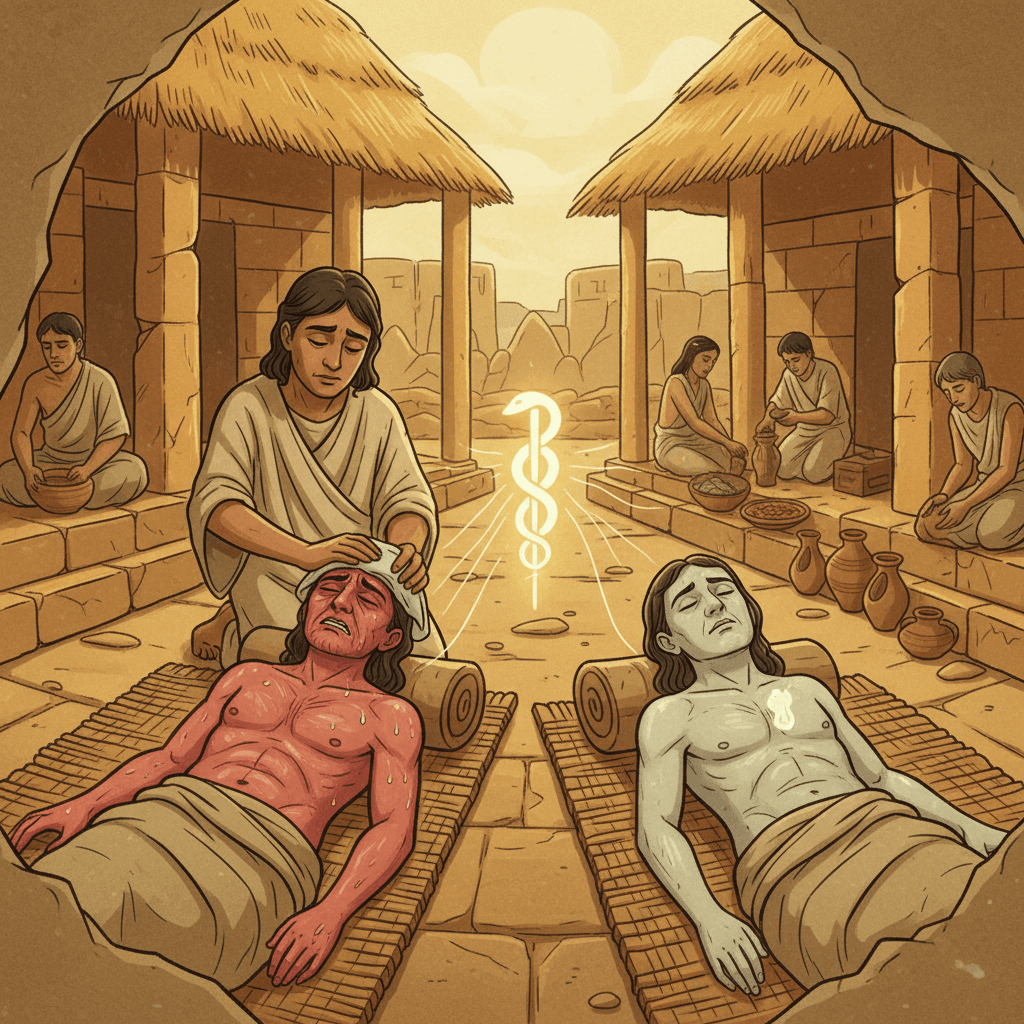
The Wrong Explanation
The straightforward model was "The Sickness Causes All the Suffering" — fever, swelling, pain, exhaustion, all of it produced by whatever was attacking the body. Under this model, worse sickness meant worse symptoms. The dying should be the most feverish, the most swollen, the most visibly afflicted.
They were not. The correlation ran the wrong way.
Crivsola sat with this contradiction for two days before it resolved itself in her mind.
The Body Fights Back
What if the fever was not the enemy's weapon? What if it was the body's?
She thought about wounds. When a person cut their hand, the area around the cut became red, hot, and swollen. She had always assumed this was damage — the injury making itself visible. But the redness and swelling appeared after the initial cut, sometimes hours later. And the most vigorously swelling wounds were often the ones that healed cleanly, while wounds that stayed pale and flat sometimes festered and killed.
The same pattern. The visible distress was not the attack. It was the defence.
Fever is the body's army mobilising. Swelling is the body rushing defenders to the site of the wound. The misery a sick person feels is partly their own body fighting back — not the sickness itself.
The Quiet Dying
This explained the paradox. The people who were dying had low fevers because their bodies had stopped fighting. The army had been overwhelmed, or had never mobilised properly. The quiet stillness of the dying was not peace. It was defeat.
The people who were recovering had high fevers because their bodies were at war — and winning. The heat, the swelling, the sweating, the aching — these were the sounds of battle. Unpleasant, yes. But they meant the defenders were active.
Tszuvok, who had been helping Crivsola carry water to the sick, asked the natural question. "What is the army made of?"
Crivsola shook her head. "I do not know. I cannot see it. I can only see what it does — the heat, the swelling, the redness. Something inside the body recognises an attack and responds. What that something is, I cannot say."
What She Could Say
She could say this much: the body was not passive. It did not simply endure sickness and hope for the best. It had some kind of active defence — a system that detected threats and fought them. The fever was evidence of this system at work, not evidence of the disease's strength.
And from the previous observation — that survivors became protected — she could add something further. The defence system did not merely fight. It learned. After winning a battle, it remembered the enemy.
A defence system that fights, and then remembers what it fought. That was something worth thinking about carefully.