
Part 10 of 18
The Expected Print
By Madhav Kaushish · Ages 12+
The newspaper published an update on the forensic investigation. Fingerprint analysis had been completed on Glerna's house. Among the prints found at the scene, Jansu's had been positively identified.
Vilila read this aloud over breakfast with the satisfaction of someone who has been proven right about something they did not actually understand.
Vilila: Her fingerprints are in the house. It is over.
Wrinje: Her fingerprints are in the house because she was in the house. She visited her aunt.
Vilila: Yes, to murder her.
Wrinje: Or to have tea with her, which is what she says she did.
Vilila: Murderers say a lot of things.
Wrinje thought about this using Glagalbagal's framework. The question was: how likely is it that Jansu's fingerprints would be found in Glerna's house if Jansu is the killer? And how likely if she is innocent?
If Jansu is the killer, her fingerprints would certainly be in the house. She was there. Probability: nearly 100%.
If Jansu is innocent, her fingerprints would... also be in the house. She visits her aunt regularly. She was there that afternoon by her own admission. Probability: also nearly 100%.
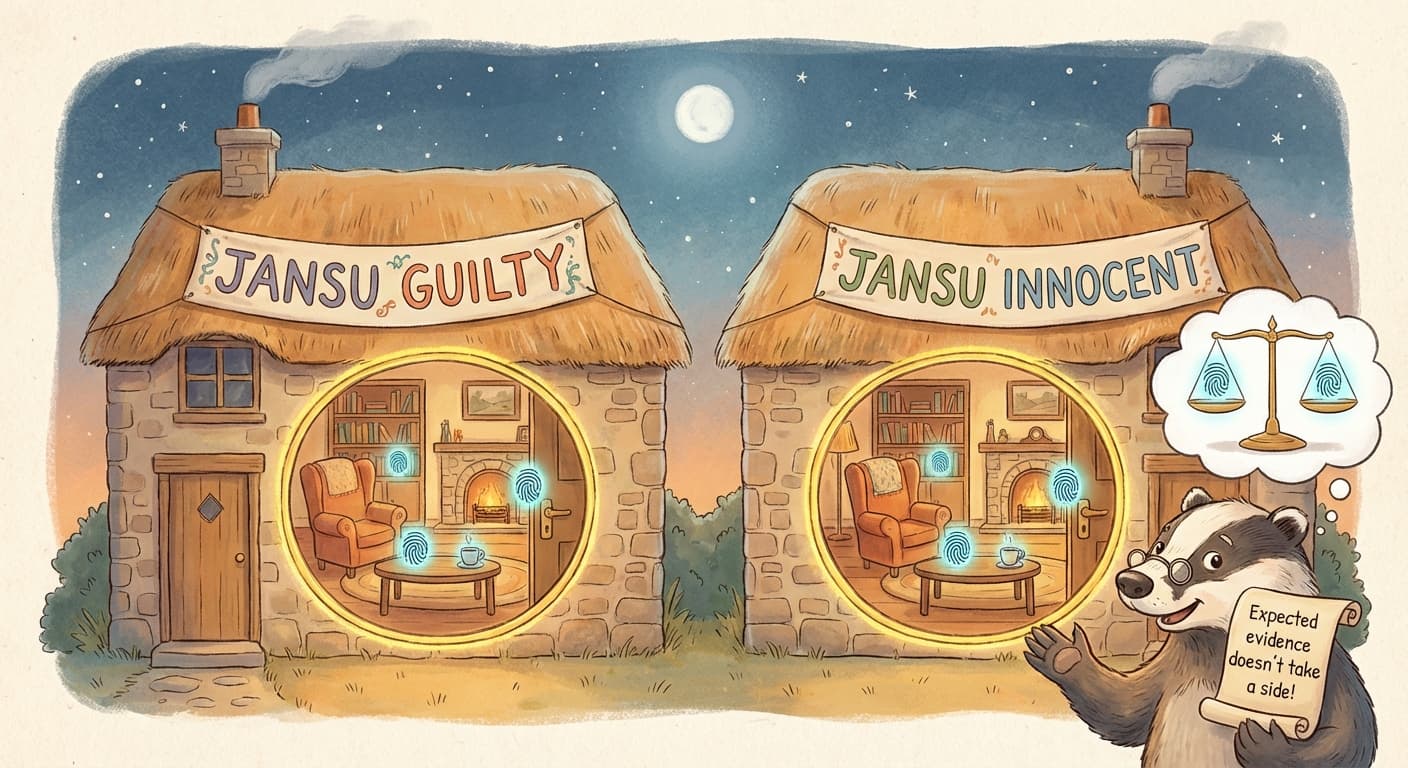
Wrinje: This evidence is useless.
Vilila: What?
Wrinje: Jansu's fingerprints being in the house tells us nothing about whether she is the killer. They would be there whether she did it or not. She visits regularly. Of course her prints are there.
Vilila: But the fingerprints of a murderer were found at the scene of the murder.
Wrinje: The fingerprints of a niece were found at the house she regularly visits. Those are two descriptions of the same fact, and the second one is more honest.
He thought about the pebbles. If you multiply the "Jansu guilty" pile by 100% and the "someone else guilty" pile by 100%, nothing changes. The ratio stays the same. The evidence does not shift the probability at all.
Wrinje: Glagalbagal was right. You have to ask how much more likely the evidence is if the person is guilty versus innocent. If the answer is "about the same," the evidence tells you nothing. It does not matter how dramatic it sounds.
Vilila: Fingerprints at a murder scene sounds very dramatic.
Wrinje: It does. And that is why it is misleading. Imagine if the news said "Woman who regularly drinks water found to have water in her stomach." You would not think that proves anything. This is the same thing. Expected evidence is not real evidence.
Vilila: Do not compare fingerprints at a murder scene to drinking water.
Wrinje: Why not? The logic is the same.
Vilila did not have a response to this, which she indicated by telling Wrinje to eat his breakfast before she fed it to the neighbor's dog.
But Wrinje was now thinking about something else. If Jansu's fingerprints were expected and therefore told them nothing, then what would unexpected fingerprints look like? What if they found prints belonging to someone who had no innocent reason to be in the house?
That would be a different story entirely. The probability of an unexpected person's prints being at the scene would be high if they were the killer (they were there to commit the murder) and low if they were innocent (why would their prints be there?). That kind of evidence would actually shift the pebbles.
Wrinje: Mum, has the newspaper said anything about other fingerprints? Ones they have not identified yet?
Vilila: I don't know. I only read the parts about Jansu.
Wrinje: Maybe I should read more carefully.