
Part 18 of 18
The Answer
By Madhav Kaushish · Ages 12+
The resolution came, as most resolutions do, not with a dramatic revelation but with a quiet piece of news on page three of the newspaper.
The police had expanded their fingerprint investigation. Following what the article delicately called "new lines of inquiry" — Wrinje suspected someone had tipped them off, though he had no evidence for this — they had collected prints from several individuals connected to Glerna who were not in the existing database.
Fliba's prints matched the unidentified prints on the murder weapon.
Wrinje read the article three times. Then he put the newspaper down and sat very still.
Vilila: What?
Wrinje: The prints on the weapon match Fliba. The housekeeper.
Vilila: Not the niece?
Wrinje: Not the niece.
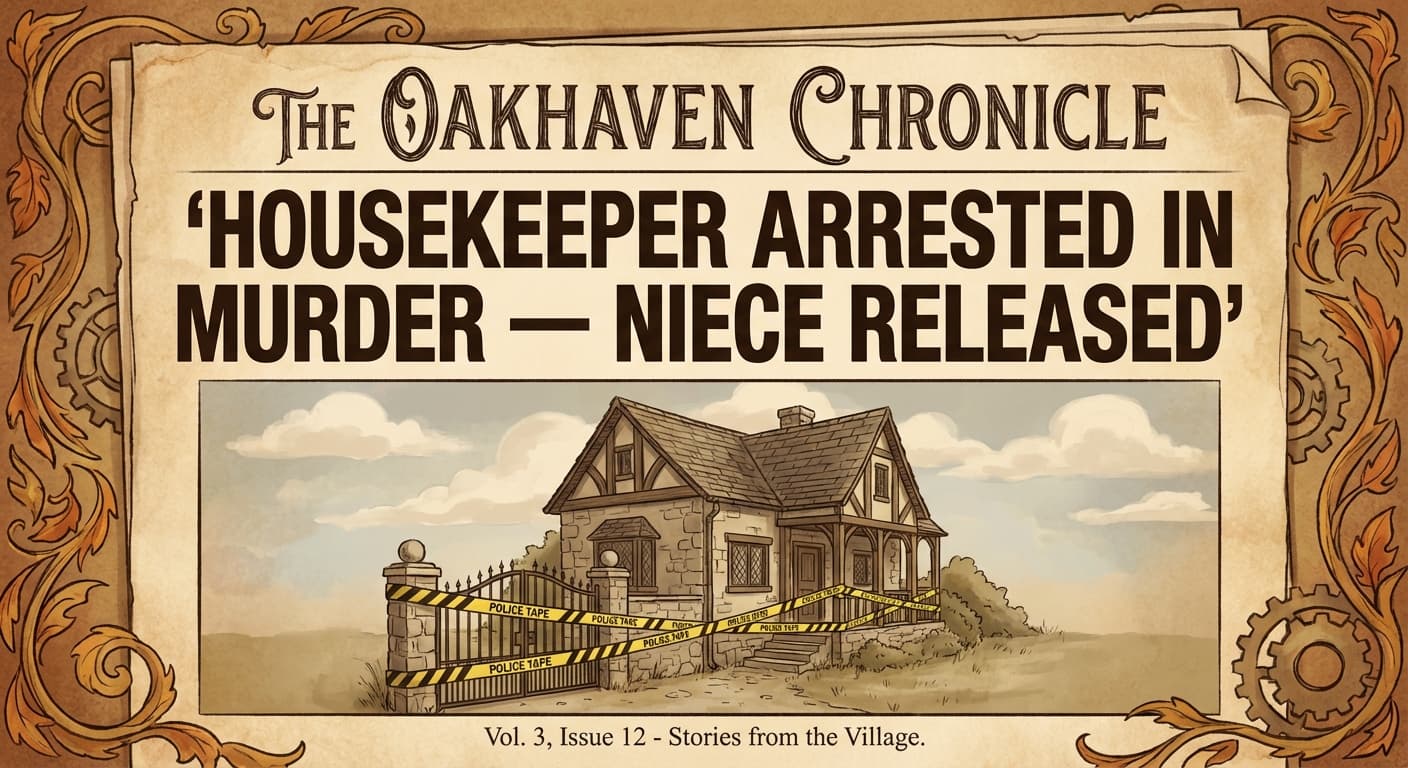
The article reported that Fliba had been arrested. Jansu had been released. The police stated that Fliba's prints on the weapon, combined with her motive (the will change), her access (her own key, explaining the lack of forced entry), and her lack of an alibi during the murder window, constituted a strong case. Fliba had denied the charges but offered no alternative explanation for how her prints came to be on the candlestick that killed Glerna.
Vilila: I thought she had a key. She was the housekeeper. Maybe she touched the candlestick while cleaning.
Wrinje: That is a fair question. And that is actually the same kind of reasoning we have been doing all along. How likely is it that Fliba's prints are on the weapon if she is guilty? Very likely — she used it to kill Glerna. How likely if she is innocent? Well, she cleaned the house, so she might have touched a candlestick on the mantle. But the article says the prints were found in a grip pattern consistent with the weapon being swung, not with it being dusted or moved.
Vilila: A grip pattern?
Wrinje: The way you hold something matters. If you are cleaning, you pick it up gently. If you are using it as a weapon, you grip it tightly in a different position. The forensic analysis looked at the angle and pressure of the prints. They were consistent with the weapon being held as a weapon.
Vilila: So the evidence is not just that her prints were there, but how they were there.
Wrinje: Exactly. And that makes the likelihood ratio much higher. The probability of prints in a grip pattern if she is guilty is very high. The probability of prints in a grip pattern if she is just a housekeeper who dusted the candlestick is very low.
Glagalbagal called that evening. She had seen the news.
Glagalbagal: How do you feel?
Wrinje: Strange. I think I got the answer right. But I did not expect it to feel like this.
Glagalbagal: Like what?
Wrinje: I thought figuring out who did it would feel satisfying. Like solving a puzzle. But an old woman is still dead and a young woman spent weeks in jail for something she did not do.
Glagalbagal: That is the part that probability cannot help with.
Wrinje: Can I ask you something? Looking back at the whole thing — from the O.J. Simpson case to now — what was the point? What did I actually learn?
Glagalbagal: What do you think you learned?
Wrinje: I learned that you have to ask the right question. That was Part 1 — Dershowitz asked the wrong probability question and it changed the whole argument.
Glagalbagal: What else?
Wrinje: That the starting point matters. Before you look at evidence, you need to know the base rates — how likely each possibility is before any evidence comes in. That was the hypothetical village.
Glagalbagal: Keep going.
Wrinje: That not all evidence is equal. Some evidence shifts the probability a lot, some barely at all. The arrest told us almost nothing because it was based on the same information we already had. The eyewitness testimony told us something, but less than I thought, because witnesses are unreliable. The fingerprints told us nothing because they were expected. The will change told us a lot because it was much more likely if Fliba was guilty.
Glagalbagal: And?
Wrinje: That you have to consider all the possibilities, not just the first one you hear. I spent weeks thinking only about Jansu because the police told me to. That is confirmation bias. And that the Prosecutor's Fallacy and the Defense Attorney's Fallacy are both caused by the same mistake — ignoring what you already know.
Glagalbagal: And the final lesson?
Wrinje: That no single piece of evidence solves anything. Each piece is a nudge. The answer comes from combining many nudges. Fliba was not convicted by one clue — it was motive plus access plus opportunity plus the fingerprints. Each one alone was uncertain. Together, they were overwhelming.
Glagalbagal: The pebbles do not solve the crime. They tell you where to look.
Wrinje: That is a good way to put it.
Glagalbagal: I have been saving it.
Vilila: Are you two done? Can we stop talking about murder now?
Wrinje: Yes. I think we are done.
Vilila: Good. Because I have been living with a twelve-year-old detective for months and I would like my son back.
Wrinje: I was not gone, Mum.
Vilila: You were gone in spirit. You were present in body but your mind was in a hypothetical village counting pebbles.
Wrinje: I promise I will not investigate any more murders.
Vilila: That is the bare minimum of what I expect from you.
Glagalbagal: Unless another one happens.
Vilila: Do not encourage him.