
Part 7 of 18
The Neighbourhood
By Madhav Kaushish · Ages 12+
Wrinje decided to visit the neighbourhood where Glerna had lived. Vilila objected on the grounds that there was a murderer on the loose, and Wrinje countered that the alleged murderer was currently in jail, and Vilila said there could be other murderers, and Wrinje said that by that logic he could never leave the house, and Vilila said that was an excellent idea.
He went anyway.
Glerna's street was quiet. Her house was marked off with police tape, which made it look more dramatic than it probably needed to. The houses on either side were modest — stone walls, small gardens, the kind of fences that people spend entire lifetimes arguing about.
Hyjop's provisions store was two streets over. It was the kind of shop that sold everything from soap to dried fish, and where you went as much for the gossip as for the groceries. The sign above the door simply read "Hyjop's" — no indication of what was sold, as though the name alone should suffice.
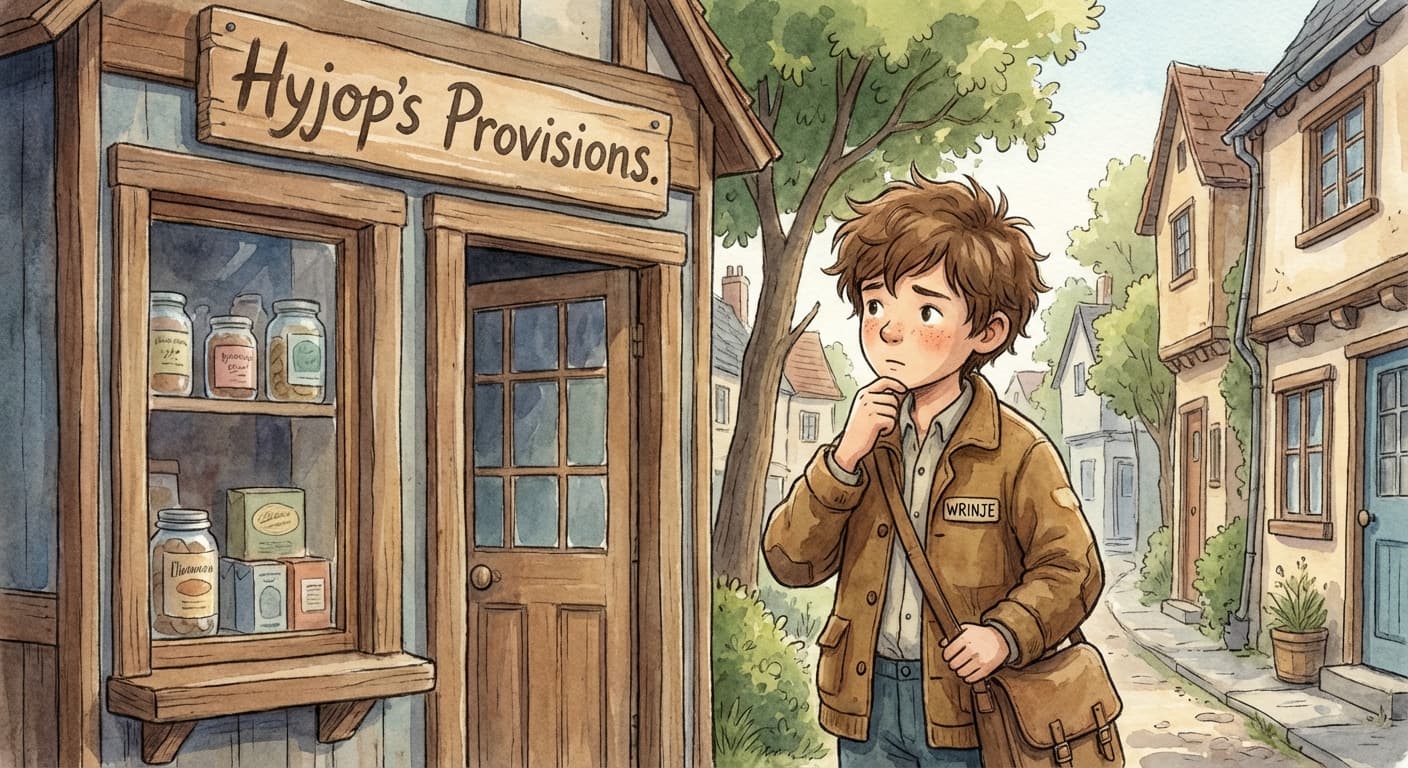
Wrinje: Hello. Are you Hyjop?
Hyjop: Who wants to know?
Wrinje: My name is Wrinje. I live a few streets over. I have been reading about Ms. Glerna in the newspaper.
Hyjop: Terrible business. I have been in this neighbourhood thirty years and nothing like it has ever happened. Well, there was the incident with Porvuya's goat, but that was more of a misunderstanding.
Wrinje: You told the police you saw Jansu near Glerna's house at 7pm?
Hyjop: I did. I was closing up the shop and I saw her walking toward the house. I know Jansu by sight — she comes into the shop sometimes when she visits her aunt.
Wrinje: Did you see anyone else near the house that evening?
Hyjop: That evening specifically? I was not paying attention to every person on the street. But I can tell you about the people who are always around that house.
Wrinje: Please do.
Hyjop: Well, there is Fliba. She is — was — Glerna's housekeeper. Came every day, practically ran the place. Cooked, cleaned, kept the old lady's affairs in order. She has her own key and everything.
Wrinje: Every day?
Hyjop: Rain or shine. Been doing it for years. Though I heard there was some trouble recently. Glerna was unhappy about something — I do not know the details, but Fliba looked upset the last few times I saw her.
Wrinje: Who else?
Hyjop: Klimpan. He lives next door. Grumpy old man. He and Glerna have been fighting about the fence between their properties for as long as I can remember. He says it is on his land, she says it is on hers. They shout at each other in the garden. Last month I heard Klimpan say — and I am quoting here — "I will tear that fence down and you with it."
Wrinje: That sounds like a threat.
Hyjop: Klimpan threatens everything. He threatens the postman for delivering letters too loudly. I would not take it seriously, but then again, people said the same thing about Porvuya's goat.
Wrinje: Anyone else?
Hyjop: There was the handyman, Lagard. He was doing some work on Glerna's fence that week — the very fence Klimpan hates. He was there on Monday and Tuesday. The murder was Tuesday evening. I saw him leaving around 3pm that day.
Wrinje: So Lagard was at the house earlier the same day.
Hyjop: He was. Nice enough fellow. Does odd jobs around the neighbourhood. But you never really know people, do you?
Wrinje bought a bag of dried figs to be polite and walked home, thinking hard.
Until now, the entire investigation — the newspaper coverage, the police arrest, even his own thinking — had focused on one suspect: Jansu. But in a single conversation with Hyjop, three more names had appeared. Fliba the housekeeper, who had a key and came every day. Klimpan the neighbor, who openly fought with Glerna. Lagard the handyman, who was at the house on the day of the murder.
That was four possible suspects, not counting the possibility that a complete stranger had done it.
Wrinje realized that he had been making an error. He had been asking "did Jansu do it?" when he should have been asking "who did it?" Those are different questions. The first assumes there is only one possibility to evaluate. The second forces you to consider all the possibilities at once.
It was like Glagalbagal's hypothetical village, but now with real people. The probability of Jansu being guilty was not just about how suspicious Jansu looked. It was about how suspicious she looked compared to everyone else.
Vilila: You went to a stranger's shop and interrogated him about a murder?
Wrinje: I bought figs.
Vilila: That makes it worse, not better. You do not even like figs.